Labour has just concluded its first annual conference with Andy Burnham as leader, setting the scene for what could be a policy-filled end to the year. CFG's Policy Officer Isaac Bristol looks for signs of hope, and shares the inside track.
Signs of hope, inside and out?
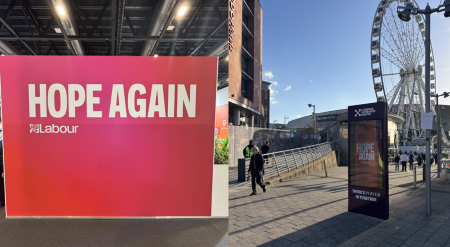
“Hope” nominally defined this year’s Labour Conference. It was inescapable, from the speeches and pamphlets to the signs around the conference hall. What form that hope would take is what many of the attendees were there to better understand.
To start at the end, Burnham’s speech took the headlines, and with good reason. He made a sweeping set of announcements, or allusions to announcements.
This included introducing a National Care Service, at the expense of changes to the triple lock, a discussion of electoral reform, as well as steps towards gaining “greater control” of industries, such as water, energy and housing.
He also restated the VAT changes for electricity bills, which came into place on 1 October. You can read more about the implications for charities and the changes here: New VAT relief on electricity bills.
Although not a focus of the speech, Burnham also highlighted the importance of AI to this Government’s vision of the UK’s future, positioning Britain as a leader in the next revolution. Chancellor John Healey echoed this point, stating that the UK would “win” the AI revolution.
The inescapability of the topic was reflected in the number of events, discussions and fringe sessions focused on the future of AI. However, its short, medium and longer-term impact on civil society remains largely undiscussed, and will need to be a key focus for the Government moving forward.
An interesting takeaway was also what went unmentioned: the next major policy event - now less than a month away - the Autumn Budget. Throughout both the Prime Minister’s and the Chancellor’s speeches, there was only one passing mention of what may come in the autumn fiscal event. This reflects the whisperings that it will be a moderate Budget focused on maintaining stability against an increasingly worrying financial picture.
Perhaps to balance out a conservative budget, we expect the Government to publish a “plan for Britain” and set out how, “over 10 years” the Government will “make this country work for you again”. This may ultimately contain more significant change than the Budget itself.
Perhaps unsurprisingly, civil society did not feature at length in the headline speeches. However, it still played a major role in the wider conversations and fringe events across conference.
Particularly timely, given it was Gift Aid Awareness Day on 1 October, were the discussions around Gift Aid. Vicky Foxcroft, on one of her first public outings as the new Civil Society Minister, said: “We need to do more” to promote Gift Aid.
This came in addition to a discussion hosted by More in Common and NCVO, with Jess Phillips MP, on how civil society can help empower communities. Within it, the importance of Gift Aid to the charity sector moving forward was emphasised.
Please share and support our new campaign - Back the Future of Gift Aid - in the run-up to the Autumn budget.
The current polycrisis facing charities shows no signs of ceasing. The sector is feeling the impact of depleted resilience and reserves; it is paramount that the Government introduces changes to ensure charities can continue to sustainably deliver essential services.
Although hope is undeniably an important first step, it must be followed by the policy detail that charities - and those who rely on them - need to build future budgets and plans. We hope to see some of these details before the end of the year.
If you'd like to learn more about CFG's policy work, join CFG for our next quarterly Policy Update on Tuesday 8 December, where we'll share more on the Autumn budget, and much more!