Jeffrey Ball and Alice Farrer from RBC Brewin Dolphin explore the implications for trustees of the landmark Butler-Sloss judgement, with insights from Bates Wells.
For many years, trustees have faced a difficult dilemma: how to avoid investments that do not align with their charity’s purposes while also trying to maximise long-term returns.
This predicament was at the heart of a recent High Court case brought by two charitable trusts whose grantmaking policies aim to tackle climate change.
Background to the case
In the case, Butler-Sloss and Ors v The Charity Commission and the Attorney-General, the trustees of the Ashden Trust and the Mark Leonard Trust wanted clarification on whether they would be exercising their duties properly if they adopted new investment policies which would avoid investments that conflicted with their charitable purpose.
Their concerns stemmed from the fact that implementing the proposed policies would mean excluding over half of publicly traded companies and commercially available investment funds which may lead to a reduction in financial returns.
Previously, the law on charities’ duties around responsible investment was based on the 1992 Bishop of Oxford case. In that ruling, the judge said the starting point for trustees was to seek to obtain the “maximum return which is consistent with commercial prudence”.
He added that in a “minority of cases” the trustees could depart from this starting point, and if the trustees were satisfied certain investments would conflict with the charity’s purposes, they “should not so invest”.
What did the High Court decide?
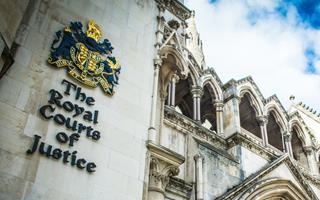
In a judgement handed down on 29 April 2022, High Court judge Mr Justice Michael Green approved the new investment policies, stating:
“The claimants have decided reasonably in my view, that there needs to be a dramatic shift in investment policies in order to have any appreciable effect on greenhouse gas emissions.”
As a result, the trustees had "exercised their powers of investment properly and lawfully".
The judge then set out ten principles, which are described in full in the official court ruling.
In summary, while a trustee’s duty of furthering the charity’s purposes is normally achieved by maximising financial returns, if they are of a “reasonable view” that certain investments conflict with those purposes, they have discretion as to whether to exclude such investments.
They should exercise that discretion “by reasonably balancing all relevant factors including, in particular, the likelihood and seriousness of the potential conflict and the likelihood and seriousness of any potential financial effect from the exclusion of such investments.”
Responding to the judgement, Mark Sainsbury, the founder of the Mark Leonard Trust, said:
“For too long, responsibilities in this area have been a source of uncertainty and differing advice and it’s been too easy for trustees to ignore the tension between their charitable purposes and certain investments.
"With this judgement there can now be no doubt that all charity trustees need to weigh up financial return against any potential conflicts with their aims and work.”
What does the ruling mean for trustees?
Oliver Hunt, Senior Associate at Bates Wells, says the key takeaway from the case is that trustees need to develop an investment policy that best serves the charity’s objects.
“For some charities, this might mean policies which contemplate a different risk-reward profile in order to exclude investments which conflict with their objects.”
As a first step, Hunt recommends that trustees review their existing investment policies through the lens of all their objects – not just maximising returns.
“Identify any investments which conflict or potentially conflict with those objects,” he says.
“Assess the seriousness of those conflicts alongside the financial effect of making or excluding an investment, including financial loss/loss of diversification, and relational/reputational risks.”
The Charity Commission is expected to incorporate the ruling in the final update of its charity investment guidance (CC14). The update was expected this autumn, but it has been delayed. We will update on this in due course.
In the meantime, the case has brought some much-needed clarity for trustees. Oliver continues:
“We hope trustees will reflect on their investment policies, and that their awareness and confidence in this area will increase, given the additional guidance provided by the case.
“That should allow investment matters, which are often a forgotten aspect of charity governance, to become more central to how trustees look after charity resources.”
Authors: Jeffrey Ball, Charity Investment Manager, Divisional Director and Alice Farrer, Charity Investment Manager, Assistant Director, RBC Brewin Dolphin. If you wish to discuss your charity’s approach to responsible investment, please get in touch.
Further reading:
What does the High Court judgement mean for charity investing? By Richard Sagar, CFG. 19 May 2022.