Following on from sessions delivered at CFG's Annual Conference and Alternative Income Generation event, Helena Wilkinson from Price Bailey explains how to improve financial sustainability by getting closer to your charity's local communities.
In the current climate and cost of living crisis, we are all aware that individuals are under increasing pressure to review their financial budgets and try to cut costs.
Unfortunately, this may encompass charity donations, and the latest news year is that direct debits have been cancelled, and charitable donations are down, especially one-off donations.
Therefore, in light of this backdrop, it is important for charities to consider their local communities, which tend to be more resilient to such changes.
Community involvement
A key aspect for any charity is to assess its local community for the ability to generate income streams, build stronger connections and engagement with the public, local authorities and businesses to be able to embed itself in that community.
The advantage of building these connections is that the local community will be more likely to be involved in income generation, supporting the charity in the delivery of its services and supporting it through challenging times. It can use its profile and relationships to its advantage.
So by understanding the local marketplace, a charity can build relationships in three main areas of your community:
Local authorities/councils
This could range from simply being on the radar as a local charity to be proud of and promote, for instance, in Council lotteries that support good causes, through to being able to tap into income available to the council.
These relationships need to be nurtured and built upon, with a clear picture as to how your charity fits into the local authority/council agenda. What are the benefits that could flow to the local authority/council from any arrangements?
For example, could the authority save through your charity services; could you support the fulfilment of their statutory obligations? Does supporting your events and fundraisers benefit councillors and mayors in some way?
Businesses
Such relationships could be financial in nature or more around their involvement and support. For example, can their staff use volunteer days to help you or could they fundraise for your charity through the company's corporate social responsibility (CSR) strategy?
Understanding the local businesses in your marketplace is a key starting point. From there, draw up a communications plan on how to approach those businesses and for what purpose. Are there mutual benefits from the arrangement, and what will these encompass?
If it’s sponsorship and involves financing from that business, then how will they be repaid as a result? What is in it for them? Could it be access to your beneficiaries as a target market through sponsorships or advertising? Or is it about name association due to your branding and standing in the community?
It is really important the approach is thought out and bespoke to capture their attention and interest. A generic approach is unlikely to be as successful.
Volunteers and the public
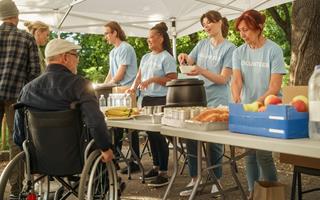
The public tends to be more motivated by local causes which benefit their community and area, so being able to use your local influences to generate interest in your causes is key to building a strong relationship with the community.
This relationship can be led by local groups/meetings/committees to more public-facing engagement, such as fundraisers or events. The key is to ‘sell’ the local benefits to your community so that they want to be engaged in your work.
How can you access the local public? Where and what will the campaign be about, and what methods will you use to spread the word?
Using local media and television, events, campaigns, social media, newsletters and mail outs may all feature, but the key will be around messaging and engagement. Can you use existing networks and events to start your messaging and gain feedback?
Again, a well-thought-out approach and plan is a key element of success.
Planning and research
Hopefully, a key message coming across for successful local community engagement is about research. The amount of research you need to undertake about your local community and investing appropriate time and energy in this aspect of the plan is a key starting point.
To ensure that your planned approach and campaign has the best chance of raising the desired outcome, be that volunteers, profile or finances, build a picture of your local competitors, businesses, community networks and third sector organisations. And take time to understand your local authority/council strategy and focus.
Rewards
Once you have created that communication/marketing or fundraising approach, it is really important to document your success or otherwise. and consider if it needs to be modified or changed.
It is also important to understand that working with the local community is all about building relationships… and trust! Therefore, this is a long game and will tend to take time to develop; however, the benefits are enormous.
Charities embedded in their local communities do tend to be able to attract volunteers, support and income streams that are more resilient and sustainable in the longer term.