March is when people across the world celebrate the achievements of women and the contributions they make. We therefore spoke to Kate Oprava, who oversees financial management and company secretarial responsibilities at Funds for Women Graduates (FfWG), a charity with over a century of history supporting women in higher education.
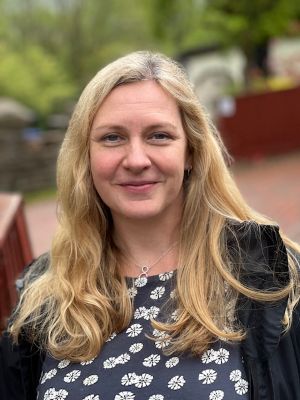
UK Women's History Month asks us to think about 'give to gain', the idea that investing in women creates returns for everyone. It's a theme that resonates deeply across the sector, where finance professionals are actively shaping the futures of the people their organisations serve.
Kate reflects on the vital role finance professionals play, the challenges facing the sector, and why the 'give to gain' ethos is a lived reality for the women FfWG supports.
Tell us a little about your organisation and the work it does to support women.
FfWG is an educational charity whose objective is promoting the higher education and wider learning of women graduates. It has been supporting women for over a hundred years; the British Federation of Women Graduates (BFWG) was established more than a century ago and played a significant role in enabling academic women to win jobs and achieve parity in British further education.
FfWG itself was originally incorporated in 1925 as the Crosby Hall Association Limited, running a hall of residence for international women graduates. In 1992, Crosby Hall was sold and the funds reinvested to provide grants for women graduate scholars.
Nowadays, FfWG supports women through two main types of grants. The Main Foundation Grant supports women in the final year of their PhD (or equivalent) with their living expenses. Emergency Grants support graduate women on postgraduate courses who face an unforeseeable financial crisis. Applications come from women from all over the world and from very different backgrounds, all studying at UK universities across a wide range of subjects.
Their reasons for needing support are equally varied: loss of funding, serious medical problems, domestic abuse, parents no longer able to provide support, and political pressures, to name just a few. The determination of these women to complete their PhDs is exemplary and inspiring.
What drew you to work there, and what keeps you motivated in your role?
I was drawn to the role because I was looking for an additional part-time position and was interested in working for a grant-making charity. My responsibilities encompass financial management, the Company Secretary role, and all other administration outside of the grants process itself. FfWG is an extremely lean organisation, which ensures that as much funding as possible goes directly to the grants.
What keeps me motivated is working with FfWG's strong, all-women board. I've been genuinely impressed by their commitment to good governance and by the way every board member contributes and listens to differing points of view in a respectful and constructive way.
How do you see your work as a finance professional contributing to your charity's mission?
My role contributes to FfWG's mission by providing accurate, timely financial information. By developing detailed budgets, I help the board make informed decisions about the level of grants that can responsibly be afforded. I also provide detailed financial scenarios and model the impact of different levels of grant awards, so that trustees have the fullest possible picture when setting the grants budget each year. My broader experience in the charity sector also allows me to contribute specialist knowledge on governance matters.
Alongside that, I scrutinise FfWG's costs to ensure they remain competitive and that the maximum amount of money flows to grant awards rather than overheads. Without strong financial leadership in a women's charity, that informed decision-making becomes much harder.
‘Give to gain' is the idea that investing in women creates returns for everyone. How does that idea shape the way your organisation works?
'Give to gain' is very much the ethos of FfWG. The thinking behind supporting women in the final year of their PhD is that this is the point at which targeted investment makes the greatest difference. These are women most likely to finish their degrees and go on to have successful careers, whether in academia or in professional fields beyond it.
The cumulative impact is that grants awarded during the charity's existence now exceed £5 million.
What is the single biggest challenge your organisation is facing right now, and how are you working to overcome it?
The biggest challenge facing FfWG right now is financial, shaped by the combination of the rising cost of living and high inflation in recent years. This has meant students need greater support precisely at a time when FfWG's investments have faced some headwinds.
One of the most significant shifts we've seen is in the length of PhD programmes. In the past, most students completed their studies in three years, and most applicants were self-funded students who had simply run out of money. Now, the majority of students take four years to complete, meaning many have been funded for three years but need support for their final year.
Those with substantial grants might have been expected to save some of their income to cover a fourth year, but for students whose grants have only just covered costs (increasingly common as the cost of living has outpaced funding increases) that hasn't been possible.
We also have a notable number of international students whose home-country funding or parental support has been significantly eroded by exchange rate movements, meaning a grant that was sufficient at the start of their course may now be worth a fraction of its original value. The challenge for FfWG is to strike the right balance between supporting students today and preserving the value of our investments to support the women students of the future. We are only able to fund those assessed as having the greatest need, and in 2025, just 14% of Main Grant applications were successful.
We are navigating this through very strong governance: a dedicated Grant Subcommittee applies a rigorous process to reviewing applications, the board regularly reviews budgets and investment performance, and we require at least one trustee to hold specialist investment knowledge to ensure the portfolio is both maximising returns and adhering to our ESG criteria.
Thanks Kate!
Kate's reflections are a powerful reminder of why skilled financial leadership matters so much within the women's charity sector. Her work ensures that every pound is deployed with purpose, and with an eye to both the present need and the long-term mission.
This Women's History Month, CFG is proud to celebrate the contribution of women in charity finance, and the work of organisations like FfWG that embody the 'give to gain' principle every single day.
To find out more about Funds for Women Graduates and to support their work, visit www.ffwg.org.uk.
Read our 2025 article Celebrating Women in Charity Finance, where we spoke to women from across the charity finance sector about why they love what they do, what they're most proud of, and who has inspired them.